





Additional features
-
Night mode

“Women behind bars”: Treason leading to crime, the concept of happiness and Gulnara Karimova in prison (final part)
Kun.uz journalists visited the women’s colony No. 21 in the Zangiata district, Tashkent region, where they got acquainted with the lifestyle of prisoners and prepared several reports.
In the previous reports, readers were presented with information about the lifestyle in the women’s colony, as well as several interviews with female prisoners.
Below we bring to your attention the final part of the reports from the “Women behind bars” series, filmed in the only female colony in Uzbekistan. A prisoner from Shakhrisabz, serving her second sentence, will talk about her life from being a teacher at a prestigious university to getting imprisoned, share her plans for the future, as well as memories of serving her sentence in prison with Gulnara Karimova, the eldest daughter of the first president of Uzbekistan Islam Karimov.
“I was born in 1970 in the city of Shakhrisabz, Kashkadarya region. I am serving my second term in the women’s colony.
The first time I committed a crime was because of the betrayal of my husband. I caught him in bed with a prostitute. In anger, I raised my hand to him – he fell there. Later it turned out that he had a brain hemorrhage. He died. For this crime, I served a 6-year sentence.
After 2-3 months, I am here again. This time I was convicted of committing a crime under Article 169 of the Criminal Code (theft – committed by a particularly dangerous recidivist). I was sentenced to six years in prison.
This place is not for women. Their place is in the family, among relatives and friends. Freedom is the highest blessing,” she says.
Do you have children?
My children were still small when I committed my first crime. Now my daughter is married and has two children. She got married in 2017, and I did not see her wedding, because I was here. She put on a white dress, became a mother... I could not be next to my daughter in any of these moments.
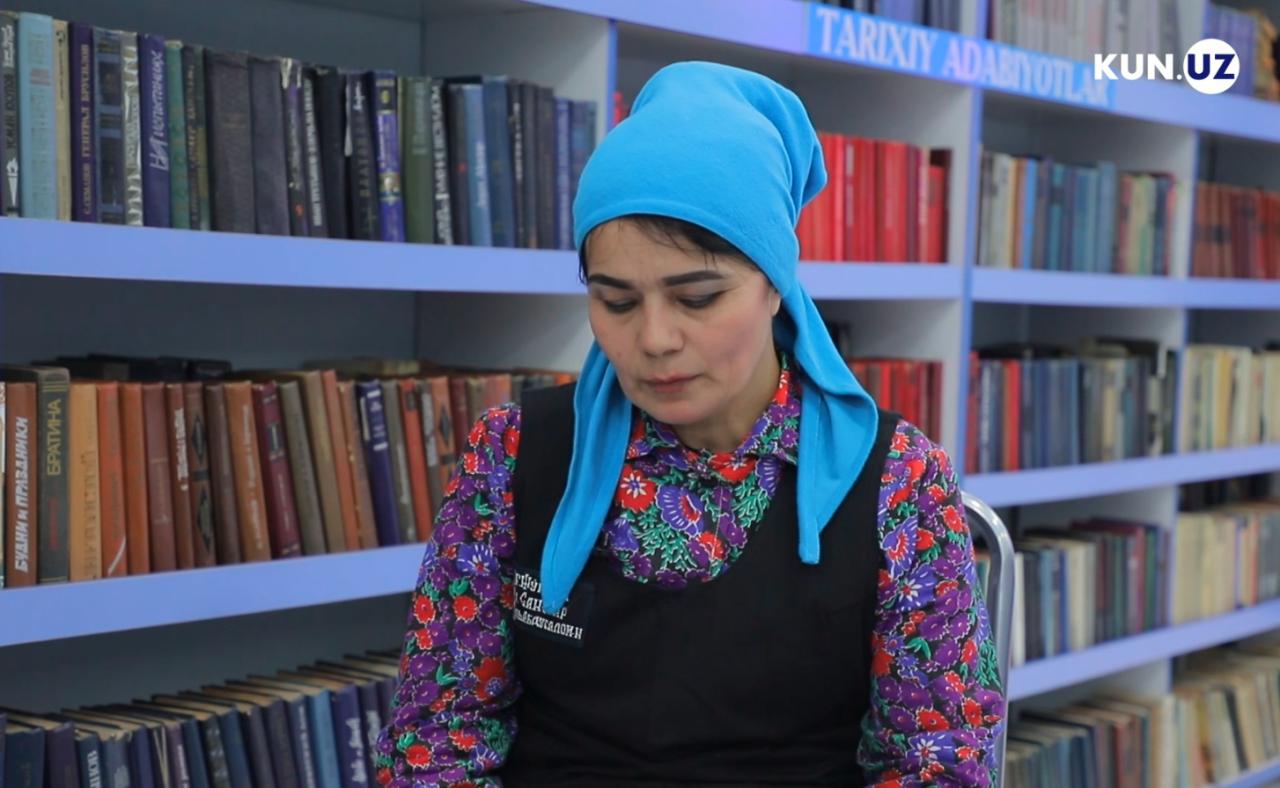
I feel sorry for every minute I spend here. I think that the most valuable thing for a person is time. There is nothing worse than wasting time. Because you cannot turn back time rewind.
Those who get here may regret what they did, or they may not regret it. But for a woman, the black robe of the colony is a serious injury. How did you feel when you first put on this uniform?
A few months ago, I was in beautiful business attire, caught a taxi and talked with friends on the phone. And today, thanks to the same work, I am sitting here in a black robe. This is a big injury for me.
I put on these clothes the second time. However, I thank God. My fate could have been even worse.
Each person has own understanding of happiness. Tell me, how did you perceive it before arriving in the colony, and how do you perceive it now, after being here?
Where is happiness? For me, happiness lies in the family. My parents, my beloved ones, my children and my health are all the happiness. Now I am far from my happiness.
Here I lost my health. I want my brothers and sisters to never commit crimes. In particular, I wish women, who are free, never embark on the path of crime, but to be grateful for everything they have.
Prison is not a pleasant place, no doubt. However, which of the current conditions do you dislike most?
I think that everything is arranged in accordance with the necessity. One example is the fact that we all wear the same black clothes, this leads us to certain conclusions. Everything here leads us to such conclusions. I think that there is nothing to change in the prison.
When we arrived here, no matter which of the prisoners we spoke to, none of them admitted that they have committed a certain crime. For some reason, one gets the feeling that they do not feel guilty…
I think innocent people do not sit here. An innocent person may be released in the course of the investigation and trial.
Before we get here, we go through a very complicated process. At that time, we are provided with various opportunities.
Lately, this women’s colony has become a center of attention in connection with the case of Gulnara Karimova, the eldest daughter of President Islam Karimov. You also served your first term here. Naturally, you met her many times. Tell us what you thought about Gulnara Karimova before and what impression did she make on you?
I hardly heard about Gulnara Karimova until I got here. She lived in the same block with us. Only then did I find out that it was Gulnara Karimova. We lived with her almost as one family. We ate together, breathed the same air.
I have one motto: who were you and what have you become? The very life of Gulnara Karimova taught me a great lesson. This woman aroused my interest in life.
I told myself “look who Gulnara Karimova was, and even she is here too.”
You asked about Gulnara. My personal opinion about her is not very positive. I can never call her a highly educated, cultured and well-bred girl.
Why am I saying that? Because, despite the fact that we are here as criminals, how we behave as persons is better seen here.
A person has a culture of speech, listening, communication and clothing. I did not see the manifestations of all this at Gulnara Karimova. This is my personal opinion about her.
How often did you meet her? Did she behave the same way as everyone else?
When she first arrived in the colony, she sneered at the conditions here. She looked around, looked at our clothes. Finally, she has become one of us.
But then her attitude towards prisoners and personnel began to change. In the end, she began to lose respect.
I did not often see her, because in the morning I used to go to work. And in the evenings I used to visit the library.
Where did Gulnara Karimova work?
Since she owed the state, she worked at a manufacturing enterprise on the territory of the penal institution. There she worked as a seamstress.
We heard that she refused food in the colony and ate only cookies. How true are these rumors?
It is partially true. She ate both local food and deliveries from home.
We hear a lot about the mistreatment of prisoners and the use of physical force against them. How true are these statements?
Before I came here, I read a lot and almost did not watch TV serials. In 1990-91, there were such programs as “Tracing a crime”, “One step”. I often watched these programs, especially when I saw how women commit crimes and appear behind bars, my hatred against them would increase. Sometimes, I used to say: “May you die!” I do not hide it.
But a person cannot know what will happen to him tomorrow.
I have never witnessed assault and torture in prison. Personally, this has never happened to me.
But there is a big difference between my first imprisonment (2014) and my imprisonment in 2019. Prison conditions are changing.
What are the differences?
For example, earlier more crimes were committed. There were 1,500-2,000 women in the prison. Among the prisoners, there were many innocent people, who came here because of other people’s evil intentions, injustice.
In 2019, the number of prisoners dropped significantly. The current number of prisoners does not reach even a thousand.

Related News
21:21 / 24.04.2025
Gulnara Karimova’s confiscated Swiss assets being directed to finance social projects in Uzbekistan

19:56 / 06.02.2025
Switzerland to return $182 million in Gulnara Karimova's confiscated assets to Uzbekistan

14:31 / 22.06.2024
Train hits a 10-year-old cycling boy to death in Tashkent region
13:34 / 14.05.2024