



Additional features
-
Night mode

Eradicating forced labor, fight against corruption, freedom of expression – Uzbekistan and EU discuss areas of cooperation
On October 7-8, the EU and Uzbekistan held the 16th meeting of the Partnership and Cooperation Agreement Sub-Committee on Justice and Home Affairs, Human Rights and related issues. The meeting was held remotely via a video link between Brussels and Tashkent.

According to the press office of the EU delegation to Uzbekistan, this annual meeting covered a wide range of topics, including human rights- and democracy-related issues, counterterrorism, migration and border management, drug policies, and the fight against corruption. Particular attention was given to the impact of the COVID-19 pandemic on the EU and Uzbekistan, and their respective policy responses as reflected in the thematic areas under discussion.
The European Union and Uzbekistan are intensifying their dialogue and cooperation across a broad range of activities, reflecting the EU’s 2019 Strategy on Central Asia, and Uzbekistan’s ongoing ambitious program of reforms. The EU and Uzbekistan are in the process of negotiating an Enhanced Partnership and Cooperation Agreement; the sixth round of negotiations took place on 29 September 2020.
The Sub-Committee reviewed and discussed recent developments in Uzbekistan and in the EU relating to human rights, democracy, justice and home affairs. Participants agreed on the important role of civil society in providing checks and balances and for the rule of law. The Sub-Committee reflected on how best to enable civil society organizations to fully perform their important role to foster Uzbekistan’s resilience and prosperity.
Uzbekistan outlined the efforts being undertaken, and progress achieved, in rooting out child and forced labor, as recognized by the latest ILO Third-Party Monitoring Report. The EU commended Uzbekistan’s productive cooperation with the ILO, which continues to bear fruit. The importance of continued monitoring and, more generally, cooperation with international and regional organizations, such as the UN, the ILO, and the OSCE, was emphasized. The EU welcomed Uzbekistan’s openness to UN scrutiny and called the country to continue to strengthen its involvement with UN Treaty Bodies and UN Special Procedures.
Notwithstanding positive developments in the context of Uzbekistan’s reform program, including prisoner releases and the closure of the Jasliq prison, the EU registered its concern at a number of challenges existing in Uzbekistan related to the freedom of expression, registration of NGOs, the persistence of torture and ill-treatment in the penitentiary system, gender equality and women’s rights, anti-discrimination. The EU called on Uzbekistan to make further commitments to eradicate torture, including by granting unhindered and independent monitoring to detention facilities. The EU also emphasized the need to rehabilitate former prisoners. Uzbekistan presented its priorities and measures to modernize its legal system and to improve the business climate, as well as to fight against corruption.
The EU and Uzbekistan also exchanged views on issues including violent extremism and radicalization, migration and border management, and the fight against illicit drugs. Cooperation and dialogue programs such as BOMCA (Border Management in Central Asia) and CADAP (Central Asia Drug Action Program) provide an important platform for cooperation and support in these policy areas.
During its preparation of this Sub-Committee meeting, the EU met representatives of local and international NGOs, EU Member States, as well as other international partners.
The EU delegation was headed by Boris Iarochevitch, Head of Division for Central Asia in the European External Action Service. The delegation of Uzbekistan was headed by Ikrom Saipov, Acting Head of the International Legal Cooperation Department in the Ministry of Justice.

Related News
17:20 / 27.05.2025
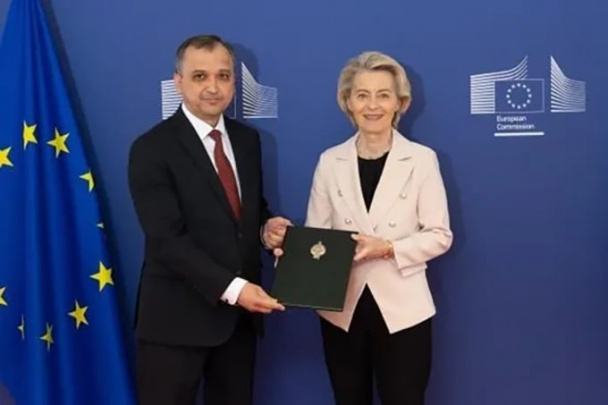
Uzbekistan’s ambassador presents credentials to European Commission President
18:40 / 22.05.2025
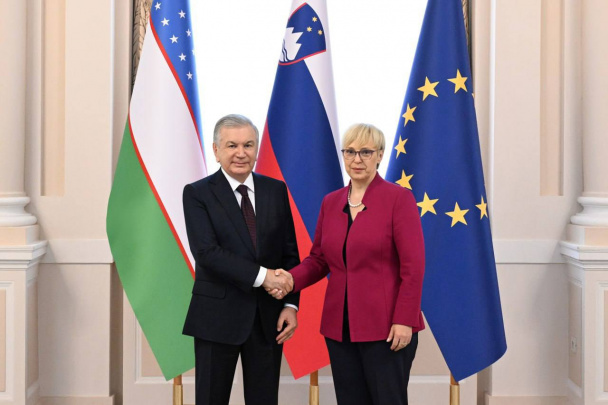
Uzbekistan eyes EU market access through Slovenia’s Port of Koper
12:04 / 22.05.2025
Rising tally: Another Uzbek company faces EU sanctions

13:44 / 21.05.2025